Why AI + Human Expertise Is the Future of Personal Training - And What That Actually Means in Practice
AI can build you a workout in seconds. It can't catch a burnout before it happens — here's the model that actually works.

Jul 6th, 2026
Why AI + Human Expertise Is the Future of Personal Training - And What That Actually Means in Practice
AI can build you a workout in seconds. It can't catch a burnout before it happens — here's the model that actually works.
Jul 6th, 2026
Why AI + Human Expertise Is the Future of Personal Training - And What That Actually Means in Practice
AI can build you a workout in seconds. It can't catch a burnout before it happens — here's the model that actually works.
Fernando Olivares
Dot Fer | ProductFitCoach
Jul 6th, 2026
Why AI + Human Expertise Is the Future of Personal Training - And What That Actually Means in Practice
AI can build you a workout in seconds. It can't catch a burnout before it happens — here's the model that actually works.
Fernando Olivares
Dot Fer | ProductFitCoach
Jul 6th, 2026
Why AI + Human Expertise Is the Future of Personal Training - And What That Actually Means in Practice
AI can build you a workout in seconds. It can't catch a burnout before it happens — here's the model that actually works.
Jul 6th, 2026
There's a conversation happening in fitness right now that I think is worth having honestly, and it matters more if you work in tech than almost anywhere else. AI is everywhere. Apps generate training plans in seconds, algorithms claim to personalize everything. And the natural reaction from a lot of coaches is somewhere between skepticism and mild threat. If a tool can do in 30 seconds what took us hours to build, what exactly is our role?
There's a conversation happening in fitness right now that I think is worth having honestly, and it matters more if you work in tech than almost anywhere else. AI is everywhere. Apps generate training plans in seconds, algorithms claim to personalize everything. And the natural reaction from a lot of coaches is somewhere between skepticism and mild threat. If a tool can do in 30 seconds what took us hours to build, what exactly is our role?
There's a conversation happening in fitness right now that I think is worth having honestly, and it matters more if you work in tech than almost anywhere else. AI is everywhere. Apps generate training plans in seconds, algorithms claim to personalize everything. And the natural reaction from a lot of coaches is somewhere between skepticism and mild threat. If a tool can do in 30 seconds what took us hours to build, what exactly is our role?
There's a conversation happening in fitness right now that I think is worth having honestly, and it matters more if you work in tech than almost anywhere else. AI is everywhere. Apps generate training plans in seconds, algorithms claim to personalize everything. And the natural reaction from a lot of coaches is somewhere between skepticism and mild threat. If a tool can do in 30 seconds what took us hours to build, what exactly is our role?

Photo by Eduardo Cano Photo Co. on Pexels.
Photo by Eduardo Cano Photo Co. on Pexels.
Photo by Eduardo Cano Photo Co. on Pexels.
Photo by Eduardo Cano Photo Co. on Pexels.
Photo by Eduardo Cano Photo Co. on Pexels.
I spent eight years in tech, as a Product Manager, inside the same demanding, always on environments most of my clients still work in, before becoming a certified personal trainer and building FitDots, an AI powered training system backed by a team of certified trainers and nutritionists.

Photo of me, Fernando Olivares, receiving my Personal Trainer Certification.
Photo of me, Fernando Olivares, receiving my Personal Trainer Certification.
Photo of me, Fernando Olivares, receiving my Personal Trainer Certification.
Photo of me, Fernando Olivares, receiving my Personal Trainer Certification.
Photo of me, Fernando Olivares, receiving my Personal Trainer Certification.
My honest take: AI is genuinely useful for a narrow but important set of things, and almost useless for everything else that makes coaching actually work. Especially for someone whose real bottleneck isn't willpower, it's a calendar full of meetings and a nervous system running on fumes. The trainers who figure out that distinction early are going to have a real advantage. So will the tech professionals who figure out which half of the equation they actually need, and when.
My honest take: AI is genuinely useful for a narrow but important set of things, and almost useless for everything else that makes coaching actually work. Especially for someone whose real bottleneck isn't willpower, it's a calendar full of meetings and a nervous system running on fumes. The trainers who figure out that distinction early are going to have a real advantage. So will the tech professionals who figure out which half of the equation they actually need, and when.
My honest take: AI is genuinely useful for a narrow but important set of things, and almost useless for everything else that makes coaching actually work. Especially for someone whose real bottleneck isn't willpower, it's a calendar full of meetings and a nervous system running on fumes. The trainers who figure out that distinction early are going to have a real advantage. So will the tech professionals who figure out which half of the equation they actually need, and when.
My honest take: AI is genuinely useful for a narrow but important set of things, and almost useless for everything else that makes coaching actually work. Especially for someone whose real bottleneck isn't willpower, it's a calendar full of meetings and a nervous system running on fumes. The trainers who figure out that distinction early are going to have a real advantage. So will the tech professionals who figure out which half of the equation they actually need, and when.
My honest take: AI is genuinely useful for a narrow but important set of things, and almost useless for everything else that makes coaching actually work. Especially for someone whose real bottleneck isn't willpower, it's a calendar full of meetings and a nervous system running on fumes. The trainers who figure out that distinction early are going to have a real advantage. So will the tech professionals who figure out which half of the equation they actually need, and when.
What AI is actually good at
AI is good at logistics. Taking a set of parameters (fitness level, available time) and generating a structurally coherent workout in real time. Doing that repeatedly, at scale, without fatigue. That's genuinely useful. The gap between "I want to train today" and "I have a workout that matches my current conditions" used to require either a coach on call or a user making decisions they weren't qualified to make. This is exactly the problem FitDots was built to solve: workouts that adapt based on available time, anywhere from 15 to 45 minutes, your fitness level, and feedback from previous sessions.
What AI is actually good at
AI is good at logistics. Taking a set of parameters (fitness level, available time) and generating a structurally coherent workout in real time. Doing that repeatedly, at scale, without fatigue. That's genuinely useful. The gap between "I want to train today" and "I have a workout that matches my current conditions" used to require either a coach on call or a user making decisions they weren't qualified to make. This is exactly the problem FitDots was built to solve: workouts that adapt based on available time, anywhere from 15 to 45 minutes, your fitness level, and feedback from previous sessions.
What AI is actually good at
AI is good at logistics. Taking a set of parameters (fitness level, available time) and generating a structurally coherent workout in real time. Doing that repeatedly, at scale, without fatigue. That's genuinely useful. The gap between "I want to train today" and "I have a workout that matches my current conditions" used to require either a coach on call or a user making decisions they weren't qualified to make. This is exactly the problem FitDots was built to solve: workouts that adapt based on available time, anywhere from 15 to 45 minutes, your fitness level, and feedback from previous sessions.
What AI is actually good at
AI is good at logistics. Taking a set of parameters (fitness level, available time) and generating a structurally coherent workout in real time. Doing that repeatedly, at scale, without fatigue. That's genuinely useful. The gap between "I want to train today" and "I have a workout that matches my current conditions" used to require either a coach on call or a user making decisions they weren't qualified to make. This is exactly the problem FitDots was built to solve: workouts that adapt based on available time, anywhere from 15 to 45 minutes, your fitness level, and feedback from previous sessions.
What AI is actually good at
AI is good at logistics. Taking a set of parameters (fitness level, available time) and generating a structurally coherent workout in real time. Doing that repeatedly, at scale, without fatigue. That's genuinely useful. The gap between "I want to train today" and "I have a workout that matches my current conditions" used to require either a coach on call or a user making decisions they weren't qualified to make. This is exactly the problem FitDots was built to solve: workouts that adapt based on available time, anywhere from 15 to 45 minutes, your fitness level, and feedback from previous sessions.
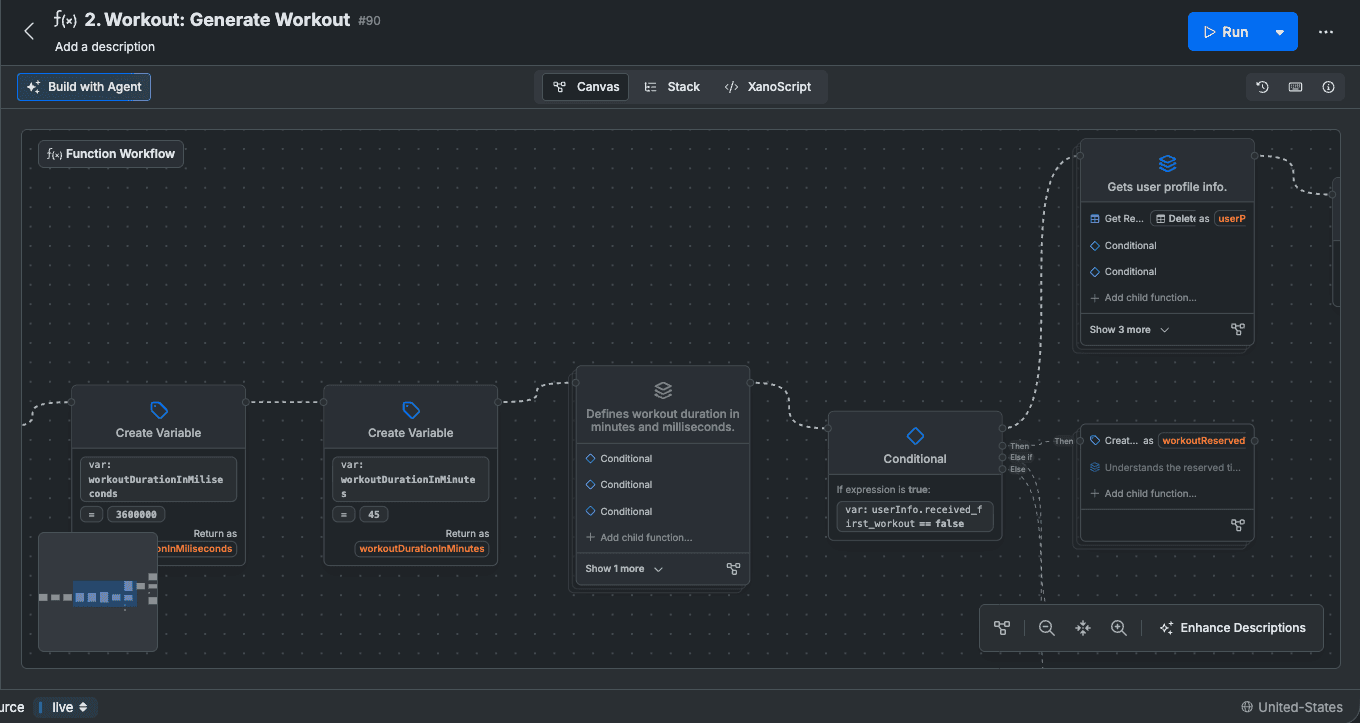
Part of FitDots Time-Flexible backend logic.
Part of FitDots Time-Flexible backend logic.
Part of FitDots Time-Flexible backend logic.
Part of FitDots Time-Flexible backend logic.
Part of FitDots Time-Flexible backend logic.
Someone who logs in with 20 minutes and low energy after an exhausting week doesn't get the same session they'd get on a rested morning. The plan adjusts automatically, and it's a solid starting point for anyone who just needs consistent structure without overthinking it. What it cannot do is pick up that someone has been quietly losing motivation, even though they're still completing every workout. It cannot sense when someone is close to burning out mentally, before that shows up on the surface. Those things require a human. That's the part we'll get to.
Someone who logs in with 20 minutes and low energy after an exhausting week doesn't get the same session they'd get on a rested morning. The plan adjusts automatically, and it's a solid starting point for anyone who just needs consistent structure without overthinking it. What it cannot do is pick up that someone has been quietly losing motivation, even though they're still completing every workout. It cannot sense when someone is close to burning out mentally, before that shows up on the surface. Those things require a human. That's the part we'll get to.
Someone who logs in with 20 minutes and low energy after an exhausting week doesn't get the same session they'd get on a rested morning. The plan adjusts automatically, and it's a solid starting point for anyone who just needs consistent structure without overthinking it. What it cannot do is pick up that someone has been quietly losing motivation, even though they're still completing every workout. It cannot sense when someone is close to burning out mentally, before that shows up on the surface. Those things require a human. That's the part we'll get to.
Someone who logs in with 20 minutes and low energy after an exhausting week doesn't get the same session they'd get on a rested morning. The plan adjusts automatically, and it's a solid starting point for anyone who just needs consistent structure without overthinking it. What it cannot do is pick up that someone has been quietly losing motivation, even though they're still completing every workout. It cannot sense when someone is close to burning out mentally, before that shows up on the surface. Those things require a human. That's the part we'll get to.
Someone who logs in with 20 minutes and low energy after an exhausting week doesn't get the same session they'd get on a rested morning. The plan adjusts automatically, and it's a solid starting point for anyone who just needs consistent structure without overthinking it. What it cannot do is pick up that someone has been quietly losing motivation, even though they're still completing every workout. It cannot sense when someone is close to burning out mentally, before that shows up on the surface. Those things require a human. That's the part we'll get to.

Part of the team behind ProductFitCoach and FitDots.
The structure behind the output
Here's something worth understanding: the quality of any AI generated plan is entirely determined by the quality of the system designed behind it. The algorithm doesn't invent methodology. It applies it. Someone, a certified professional, has to define what progressive overload looks like across fitness levels. Someone has to build the logic for what an intense but short session actually includes versus a full length one. Someone has to determine how bodyweight exercises get progressed without external load. The AI is the delivery mechanism. With FitDots, that architecture was built by a certified team, and it keeps being refined by one. The expertise is the foundation. Without it, the algorithm produces generic noise that sounds like a training plan but doesn't function like one. This reframes what AI actually is in fitness: a tool that scales human expertise, not one that replaces it.
The structure behind the output
Here's something worth understanding: the quality of any AI generated plan is entirely determined by the quality of the system designed behind it. The algorithm doesn't invent methodology. It applies it. Someone, a certified professional, has to define what progressive overload looks like across fitness levels. Someone has to build the logic for what an intense but short session actually includes versus a full length one. Someone has to determine how bodyweight exercises get progressed without external load. The AI is the delivery mechanism. With FitDots, that architecture was built by a certified team, and it keeps being refined by one. The expertise is the foundation. Without it, the algorithm produces generic noise that sounds like a training plan but doesn't function like one. This reframes what AI actually is in fitness: a tool that scales human expertise, not one that replaces it.
The structure behind the output
Here's something worth understanding: the quality of any AI generated plan is entirely determined by the quality of the system designed behind it. The algorithm doesn't invent methodology. It applies it. Someone, a certified professional, has to define what progressive overload looks like across fitness levels. Someone has to build the logic for what an intense but short session actually includes versus a full length one. Someone has to determine how bodyweight exercises get progressed without external load. The AI is the delivery mechanism. With FitDots, that architecture was built by a certified team, and it keeps being refined by one. The expertise is the foundation. Without it, the algorithm produces generic noise that sounds like a training plan but doesn't function like one. This reframes what AI actually is in fitness: a tool that scales human expertise, not one that replaces it.
The structure behind the output
Here's something worth understanding: the quality of any AI generated plan is entirely determined by the quality of the system designed behind it. The algorithm doesn't invent methodology. It applies it. Someone, a certified professional, has to define what progressive overload looks like across fitness levels. Someone has to build the logic for what an intense but short session actually includes versus a full length one. Someone has to determine how bodyweight exercises get progressed without external load. The AI is the delivery mechanism. With FitDots, that architecture was built by a certified team, and it keeps being refined by one. The expertise is the foundation. Without it, the algorithm produces generic noise that sounds like a training plan but doesn't function like one. This reframes what AI actually is in fitness: a tool that scales human expertise, not one that replaces it.
The structure behind the output
Here's something worth understanding: the quality of any AI generated plan is entirely determined by the quality of the system designed behind it. The algorithm doesn't invent methodology. It applies it. Someone, a certified professional, has to define what progressive overload looks like across fitness levels. Someone has to build the logic for what an intense but short session actually includes versus a full length one. Someone has to determine how bodyweight exercises get progressed without external load. The AI is the delivery mechanism. With FitDots, that architecture was built by a certified team, and it keeps being refined by one. The expertise is the foundation. Without it, the algorithm produces generic noise that sounds like a training plan but doesn't function like one. This reframes what AI actually is in fitness: a tool that scales human expertise, not one that replaces it.
Nutrition is where most opportunities are missed
Nutrition is where most opportunities are missed
Training gets all the attention. Nutrition does most of the work.
Body composition (how lean someone looks, how much muscle they carry) is driven mostly by what they eat. Training creates the signal. Nutrition determines whether the body actually responds to it. You can build a perfect adaptive training system and still get mediocre results if the dietary foundation is missing.
This is the part I see coaches underemphasize most often, and it's also where an AI plus human model has the most to offer.
I put the core of it into a free resource called The Lean Nutrition System - Foundations, and it comes down to four things that actually move the needle:
Enough protein (1.6 to 2.2 grams per kilogram of bodyweight, most people are simply under this number).
Treating carbs as fuel instead of the enemy.
Eating differently on training days versus rest days versus travel days.
Treating one bad meal as what it is, a single meal, not a reason to abandon the week.
None of that requires guesswork, and that's exactly the layer that gets systematized.
What it can't do is tell you which one is actually your problem: whether your plateau is a protein number, a stress response, or a pattern you can't see from the inside because you're the one living it. Same gap as training. The framework scales. Figuring out what's actually wrong with you doesn't.
The part only a human can do
I want to be specific here because "human connection" gets used as a "vague catch all". These are the four things that actually don't scale, and that no AI or algorithm is going to solve for now:
The part only a human can do
I want to be specific here because "human connection" gets used as a "vague catch all". These are the four things that actually don't scale, and that no AI or algorithm is going to solve for now:
The part only a human can do
I want to be specific here because "human connection" gets used as a "vague catch all". These are the four things that actually don't scale, and that no AI or algorithm is going to solve for now:
The part only a human can do
I want to be specific here because "human connection" gets used as a "vague catch all". These are the four things that actually don't scale, and that no AI or algorithm is going to solve for now:
The part only a human can do
I want to be specific here because "human connection" gets used as a "vague catch all". These are the four things that actually don't scale, and that no AI or algorithm is going to solve for now:
1. Assessment.
AI processes inputs. It cannot assess whether someone's reported energy level is training fatigue or early burnout, which in the tech professionals I coach almost always shows up in the body before it actually "hits" them. That requires judgment, experience with the person and understanding the sector, not just the data.
1. Assessment.
AI processes inputs. It cannot assess whether someone's reported energy level is training fatigue or early burnout, which in the tech professionals I coach almost always shows up in the body before it actually "hits" them. That requires judgment, experience with the person and understanding the sector, not just the data.
1. Assessment.
AI processes inputs. It cannot assess whether someone's reported energy level is training fatigue or early burnout, which in the tech professionals I coach almost always shows up in the body before it actually "hits" them. That requires judgment, experience with the person and understanding the sector, not just the data.
1. Assessment.
AI processes inputs. It cannot assess whether someone's reported energy level is training fatigue or early burnout, which in the tech professionals I coach almost always shows up in the body before it actually "hits" them. That requires judgment, experience with the person and understanding the sector, not just the data.
1. Assessment.
AI processes inputs. It cannot assess whether someone's reported energy level is training fatigue or early burnout, which in the tech professionals I coach almost always shows up in the body before it actually "hits" them. That requires judgment, experience with the person and understanding the sector, not just the data.
2. Nutrition beyond the framework.
The Lean Nutrition System covers what drives body composition for the mayority of the active population. But a certified nutritionist doing a 1:1 consultation catches things no system can: disordered eating patterns, medical history that affects metabolism, the gap between what someone reports eating and what they're actually eating, whether supplements are actually needed, etc. That's irreplaceable.
2. Nutrition beyond the framework.
The Lean Nutrition System covers what drives body composition for the mayority of the active population. But a certified nutritionist doing a 1:1 consultation catches things no system can: disordered eating patterns, medical history that affects metabolism, the gap between what someone reports eating and what they're actually eating, whether supplements are actually needed, etc. That's irreplaceable.
2. Nutrition beyond the framework.
The Lean Nutrition System covers what drives body composition for the mayority of the active population. But a certified nutritionist doing a 1:1 consultation catches things no system can: disordered eating patterns, medical history that affects metabolism, the gap between what someone reports eating and what they're actually eating, whether supplements are actually needed, etc. That's irreplaceable.
2. Nutrition beyond the framework.
The Lean Nutrition System covers what drives body composition for the mayority of the active population. But a certified nutritionist doing a 1:1 consultation catches things no system can: disordered eating patterns, medical history that affects metabolism, the gap between what someone reports eating and what they're actually eating, whether supplements are actually needed, etc. That's irreplaceable.
2. Nutrition beyond the framework.
The Lean Nutrition System covers what drives body composition for the mayority of the active population. But a certified nutritionist doing a 1:1 consultation catches things no system can: disordered eating patterns, medical history that affects metabolism, the gap between what someone reports eating and what they're actually eating, whether supplements are actually needed, etc. That's irreplaceable.
3. Behavioral coaching.
Getting someone to show up, to be honest about their week, to reframe a setback rather than spiral into abandonment. That's psychological work. AI can prompt. It cannot coach through resistance.
3. Behavioral coaching.
Getting someone to show up, to be honest about their week, to reframe a setback rather than spiral into abandonment. That's psychological work. AI can prompt. It cannot coach through resistance.
3. Behavioral coaching.
Getting someone to show up, to be honest about their week, to reframe a setback rather than spiral into abandonment. That's psychological work. AI can prompt. It cannot coach through resistance.
3. Behavioral coaching.
Getting someone to show up, to be honest about their week, to reframe a setback rather than spiral into abandonment. That's psychological work. AI can prompt. It cannot coach through resistance.
3. Behavioral coaching.
Getting someone to show up, to be honest about their week, to reframe a setback rather than spiral into abandonment. That's psychological work. AI can prompt. It cannot coach through resistance.
4. Accountability.
People comply differently when there's a real person on the other side who knows their history and can notice when something is off. No algorithm replicates that. None of this works if it stays abstract, though. A client who understands why the framework works (why one missed session doesn't break progressive overload, why the post workout meal actually matters) sticks with it longer than one who's just following orders. That understanding, the kind that makes motivation unnecessary, is what structure plus a human actually build together.
4. Accountability.
People comply differently when there's a real person on the other side who knows their history and can notice when something is off. No algorithm replicates that. None of this works if it stays abstract, though. A client who understands why the framework works (why one missed session doesn't break progressive overload, why the post workout meal actually matters) sticks with it longer than one who's just following orders. That understanding, the kind that makes motivation unnecessary, is what structure plus a human actually build together.
4. Accountability.
People comply differently when there's a real person on the other side who knows their history and can notice when something is off. No algorithm replicates that. None of this works if it stays abstract, though. A client who understands why the framework works (why one missed session doesn't break progressive overload, why the post workout meal actually matters) sticks with it longer than one who's just following orders. That understanding, the kind that makes motivation unnecessary, is what structure plus a human actually build together.
4. Accountability.
People comply differently when there's a real person on the other side who knows their history and can notice when something is off. No algorithm replicates that. None of this works if it stays abstract, though. A client who understands why the framework works (why one missed session doesn't break progressive overload, why the post workout meal actually matters) sticks with it longer than one who's just following orders. That understanding, the kind that makes motivation unnecessary, is what structure plus a human actually build together.
4. Accountability.
People comply differently when there's a real person on the other side who knows their history and can notice when something is off. No algorithm replicates that. None of this works if it stays abstract, though. A client who understands why the framework works (why one missed session doesn't break progressive overload, why the post workout meal actually matters) sticks with it longer than one who's just following orders. That understanding, the kind that makes motivation unnecessary, is what structure plus a human actually build together.
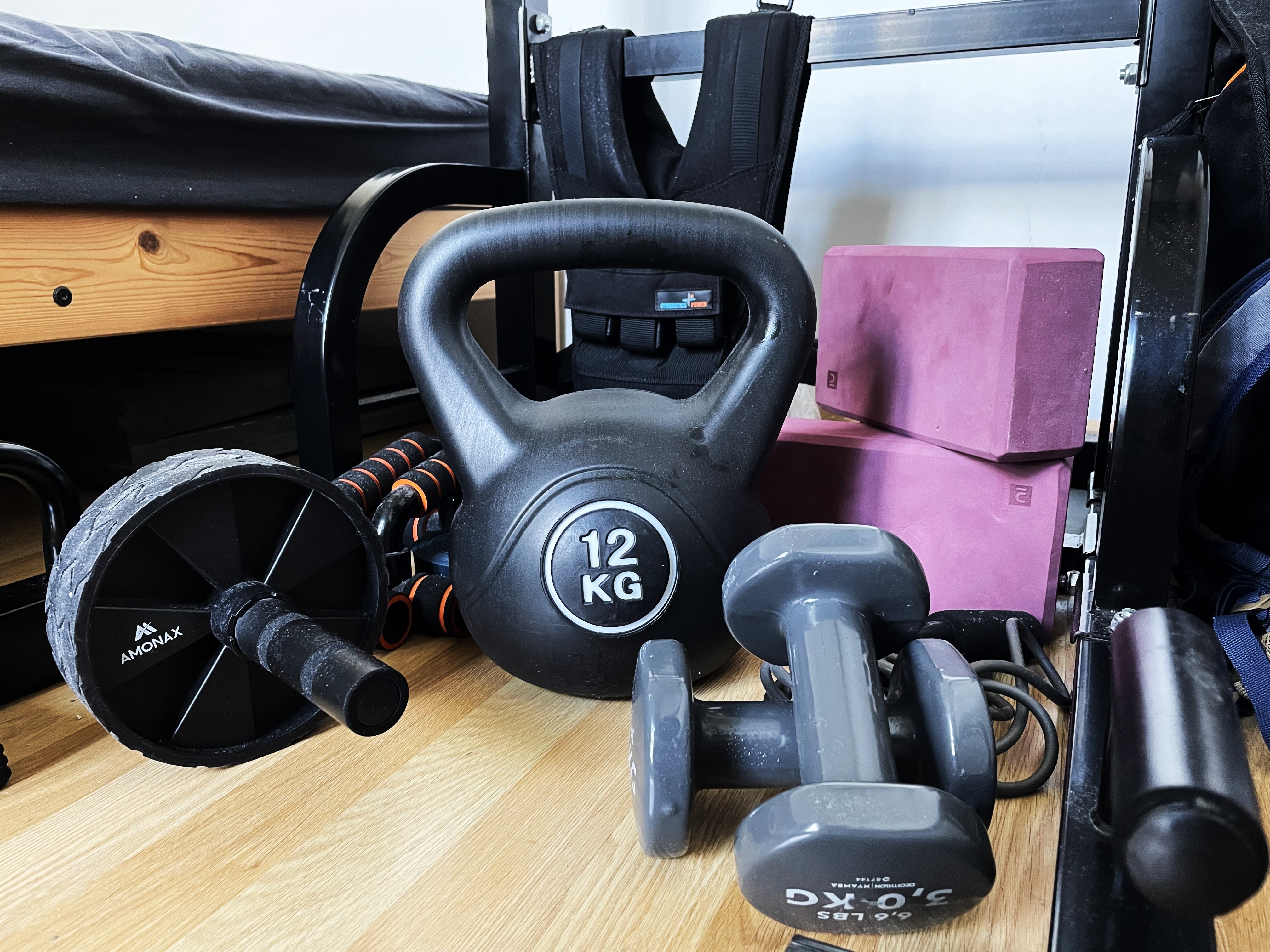
Part of my workout equipment at home.
Part of my workout equipment at home.
Part of my workout equipment at home.
Part of my workout equipment at home.
Part of my workout equipment at home.
Which one do you actually need?
Which one do you actually need?
If what you need right now is structure, something that adapts to your schedule and gives you a clear session whether you have 15 minutes or 45, FitDots (which includes the complete version of The Lean Nutrition System) will cover most of the gap. It's the right starting point for most people, and it's free to try.
If you've already got the structure and you're still stuck, you're training consistently but not seeing the changes you'd expect, or if you suspect the real issue is burnout, poor recovery, or a habit you can't self diagnose, that's when a system stops being enough and you need someone assessing your specific situation.
That's what my 1:1 coaching is built for: me, a certified nutritionist and personal trainer working directly with you.
The best version of this isn't AI replacing coaches. It's AI handling the parts coaches shouldn't have to spend their time on, so both of us can spend more of it on the part only a human can do.
If low energy, inconsistency, or burnout sound familiar, book a free Strategy Call and we'll figure out together where I can actually support you.