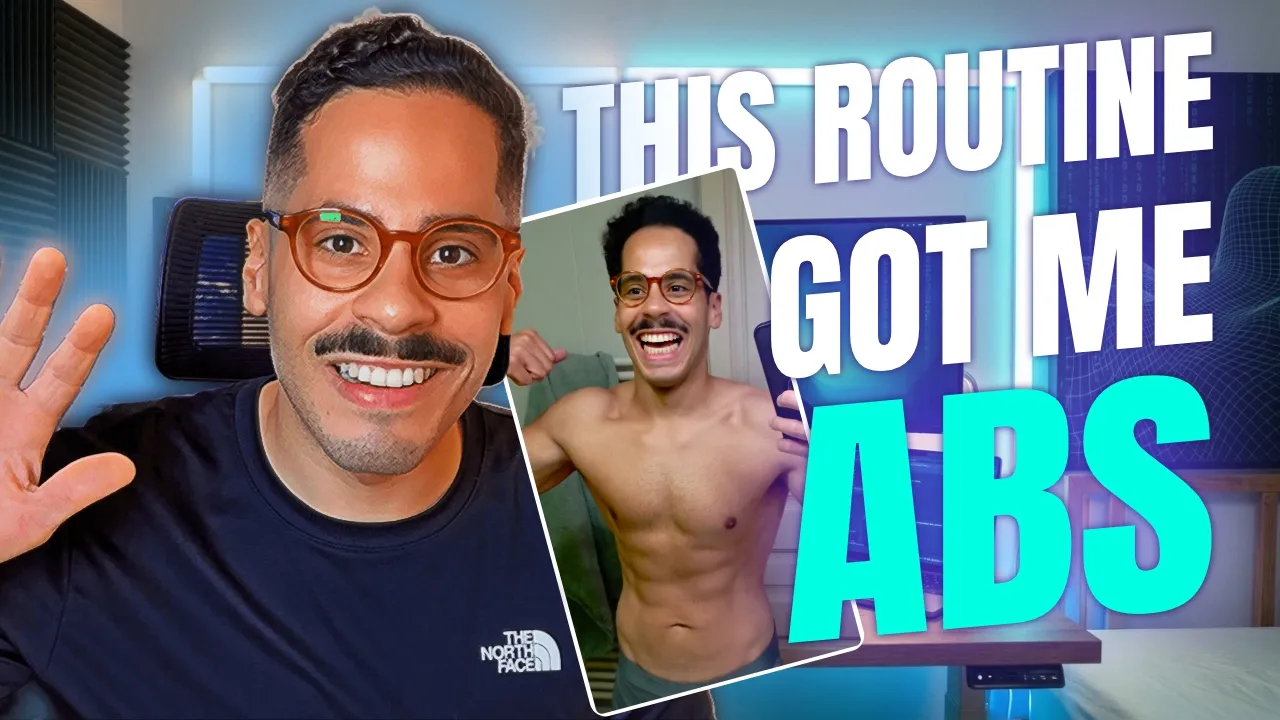
My full day of eating and training, including the pizza and ice cream.

Fernando Olivares
Dot Fer | ProductFitCoach
Nov 9th, 2026
I reached 13% body fat and got my abs while working full time for multiple early-stage tech startups. It took at least a year, and it came from a single daily routine built around my job and my personal life, with habits simple enough to repeat on the busiest days.

Dot Fer: Before and after.
Here's my full day: what I ate, when I trained, the supplements I took and how I recovered. I also explain how pizza and ice cream fit into it without setting me back, and why I stopped getting leaner once I reached 12 to 13%.
One detail you'll notice: my day actually began in the evening, instead of the morning.
I'm Dot Fer

This is my LinkedIn profile, my main social media profile. Connect with me here.
I've worked in tech for more than eight years, across different industries, and today I coach tech leaders and founders to lose stubborn fat, improve their health and show their abs, while having enough energy left for their family, without sacrificing their business or career.
You can book a free strategy call with me here.
What I believe about results
I think think that real results come from small things you can repeat even when you're busy, tired or when your agenda gets out of control. Everything below is what I got from at least a year of living the same day again and again.
Waking up and drinking water
I normally wake up between 6:30 and 6:45, it is when my light lamp alarm clock normally turns on.

I use a a Philips wake up light lamp like this one. You can get one here.
Before anything else I go to the kitchen and drink about half a liter of water with creatine in it. I tie it to this moment so I never forget it.
Creatine is one of the most researched supplements for building muscle. During a fat loss phase it helps you keep that muscle while you're in a calorie deficit, and it supports recovery too.
Next I spend at least 10 minutes in another room, with my phone out of reach (I haven't looked at it yet). I meditate or just sit, notice how I slept and how I feel, and set an intention for the day. A shower finishes the job of waking me up.
Breakfast and macros
Whether I eat breakfast depends on one question: did I train yesterday? If I did, I have breakfast. If I didn't, I skip it.
When I train and then skip breakfast the next morning, I get edgier and a little less sharp at work.
After a workout your muscles need nutrients to repair, and if you wait too long to eat, your nervous system stays on alert with higher cortisol. That's a wired feeling, and it's not positive for decision making.
That's my experience, and yours may be different. Some of my clients skip breakfast and others eat it. Listen to your body and decide from there.
On breakfast days I have a three-egg omelette, a bowl of yogurt and oats with about 75 g of berries. Together that comes to:
40 g protein
35 g carbs
20 g fat
480 kcal

Breakfast omelette with three large eggs.
I eat by an open window in the sun (closed if it's cold). On skip days I have a coffee in the sunlight instead.
Morning light anchors your circadian rhythm: it signals your body to wake up and sets the time when melatonin starts to rise at night. The result is better sleep and better recovery.
If you are into improving your sleep, here's my "Sleep Hacking 101" for better sleep guide.
Mid morning snacking

Casual mid morning snack.
This one only happens when I trained the day before and had breakfast. I eat a piece of fruit with a couple of walnuts:
5 g protein
25 g carbs
160 kcal
Lunch, carbs & fat loss
Lunch is around 1 PM, early enough to digest before my afternoon workout. Protein and carbs are the focus again. You might be wondering if that's too many carbs for one day.
If you lift or do any kind of strength training, carbs support your recovery. Fat loss comes down to a calorie deficit and enough protein to keep and repair your muscle.
If you prefer to keep it low carb, then that might be fine, if it works for you, and you ease into it and give your body time to adapt.
A typical lunch is 150 g of lean meat (chicken breast or turkey), a good portion of complex carbs (sweet potato, potatoes, or rice and beans), and a salad or veggies with a spoon of extra virgin olive oil:
40 g protein
70 g carbs
20 g fat
700 kcal

A typical tupper on a week day. I did meal prep, even working remotely.
On days I skip breakfast, this meal gets bigger.
I like to skip breakfast after a rest day, because of the the mental clarity it gives and the extra time I get, I still eat all the nutrients I skipped on this same meal.
Some of my clients can't focus or make it to lunch that way, and for them breakfast makes more sense. I choose depending on my activity and how I feel.
Emergency meals

Some of the emergency meals I tend to have always available.
And I know all of this sounds ideal, but is not always achievable, and that sometimes we cannot plan or predict. For those days my fridge always has boiled eggs, skyr, protein yogurts, oats and fruit. They also work when I travel or when I have very little time.
Pre-workout meal
A few hours later comes my pre-workout meal, which is normally a protein yogurt, 20 g whey protein and 40 g oats or 1 banana:
30 g protein
30 g carbs
5 fat
250 - 300 kcal
Training
I start training around 6:30 PM.
Body temperature tends to peak at this time of day, so your muscles and joints are warmer and move better, and cardiovascular efficiency is at its best. That makes it a good slot for almost any kind of training.
I train 3 to 4 times a week for 45 minutes, at home, which saves me commuting time. On the other days I walk. I try to move every single day.
Evening
My evening has two rules: digital shutdown, and time with my partner and my dog. The phone goes to the kitchen and stays there until the next morning, unless there's an emergency.

My phone charging in the kitchen after 20:30h.
Dinner is usually red meat or oily fish. That means a 200 g salmon fillet or 150 g of red meat, with a portion of complex carbs for recovery and a big salad. Dessert is fruit and dark chocolate. This is also when I take magnesium bisglycinate, which absorbs well and helps with sleep, along with my last glass of water of the day. The dinner adds up to:
40 g protein
80 g carbs
30 g fat
800 kcal

Normal dinner with salmon and potatoes at home.
Bedtime
I sleep 7 to 8 hours, weekends included. Winding down and keeping the phone out of reach is what sets up the next morning, and that's why I say my day starts the night before.
Pizza and ice cream
I have them after a workout. Training makes your muscles more sensitive to glucose, so they take in more of it, and refined carbs over the next couple of hours cause less trouble. Eaten this way, they fit inside my macros and I stay in a deficit.
Ref. Exercise and insulin sensitivity: a review. Int J Sports Med 2000;21(1):1-12
Where I stopped leaning out
After more than a year of this I hadn't lost any muscle. I also found my limit, which sits around 12 to 13% body fat. Below that my whole day started to revolve around my body and I was hungry all the time, which doesn't help focus either. So I stopped there.
The strategy in summary
Eat in a moderate calorie deficit with protein as the base. I aim for about 40 g per meal and build the carbs and fats around it.
Train strength 3 to 4 times a week. About 45 minutes at home.
Place your carbs around your training. Before for performance, after for recovery.
Move every day. Short walks after meals and 30 to 60 minutes on rest days. You can do it.
Keep emergency meals ready. Boiled eggs, skyr, protein yogurts, oats or fruit. Busy weeks are where most plans fail.
Protect your sleep. Sunlight first thing in the morning, phone out of the bedroom, and supplements when needed.
Save pizza and ice cream for after training or special occasions. Once or twice a week can be fine.
Final words
That's the whole routine: small, simple things repeated until they work. Take what fits your life and leave the rest.
If you're trying something in particular, reach out directly. It can be something I do or something else that's working for you. I'd like to hear it.
If you want help building a realistic fitness routine around your calendar, you can book a free strategy call.
This is my personal experience and general information. If you have a health condition, check with your physician first.