Plus a request to your company.

Fernando Olivares
Dot Fer | ProductFitCoach
Oct 13th, 2026
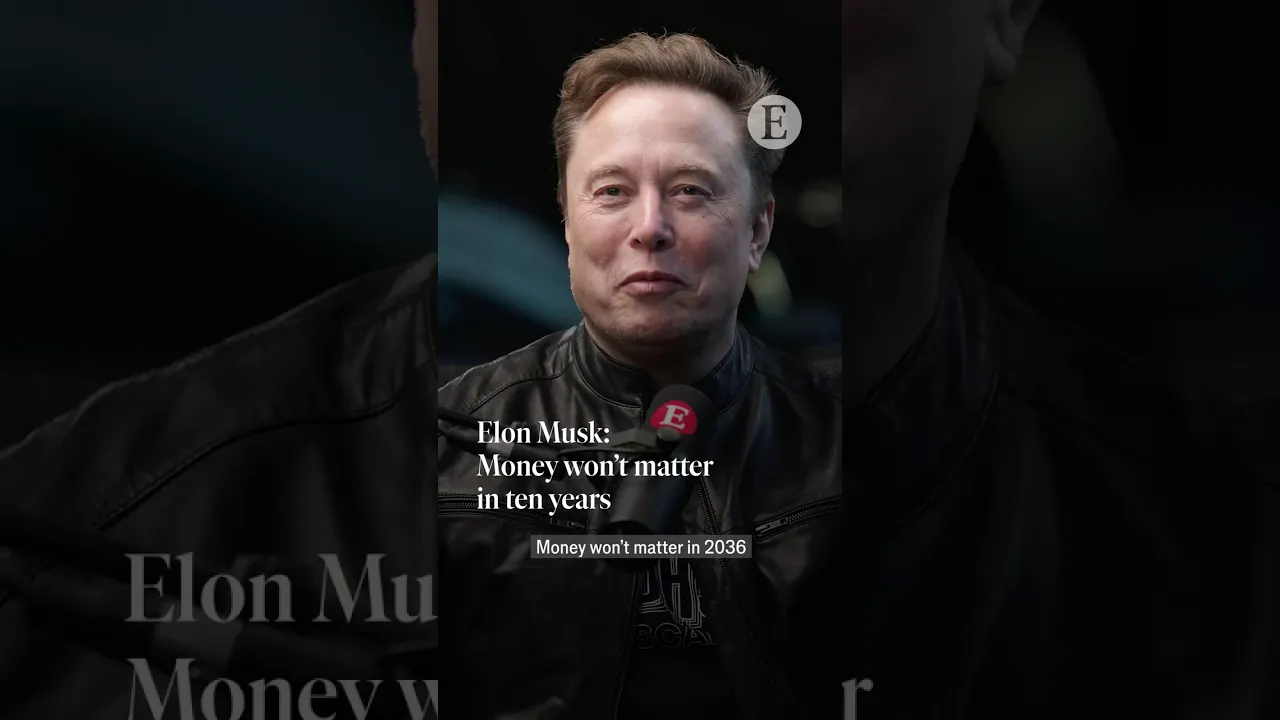
Elon Musk said something a few weeks ago that's still stuck in my head: "Money won't matter in 2036." His logic is simple. If AI and robots produce more goods and services than any human could consume, what do you even need money for?
Here's his call:
I think of it a little differently. Money will still matter, and we'll still trade value for services. What will change is what we think we're paying for, and who we choose to pay it to.
Here is my prediction, the reason I rebuilt my own career around it and a small ask to your company. I've worked in tech, now I work with founders and tech people, so this one is for you.
What is actually happening
A few years ago, what made you valuable in tech was a skill that was scarce, and companies paid well for it.
Now a tool can write the code, draft the spec, produce a first design and do the research in minutes. It isn't always perfect, and someone still has to review it. But it's good enough, often enough, that companies expect a first version in minutes instead of days, so the price of those tasks keeps falling.
We all expect this to keep improving. Perhaps every time more, needing even less human judgement, meaning far fewer people for the same result. That's the first problem.
On the other hand: it's getting harder to spot the right talent when everyone produces similar output, and we're already seeing it in practice. Hiring managers opening applications and most of them reading the same. Founders hearing a few vendors and the pitches sounding almost identical. When anyone can produce a decent version of the work, decent stops being a reason to actually take it.
You can already see it in the numbers:
A Stanford study found that workers aged 22 to 25 in the jobs most exposed to AI, like software development, saw a 13% relative drop in employment since late 2022, while experienced workers in the same jobs held steady or grew.
Ref. Brynjolfsson E, Chandar B, Chen R. Canaries in the Coal Mine? Six Facts about the Recent Employment Effects of Artificial Intelligence. Stanford Digital Economy Lab, 2025.
Either way, the direction is clear: the market is getting very good at producing skills, and not very good at telling which ones are worth it. That's where things get interesting.
What people will pay for
When you can't tell options apart by their output, you look at what you can actually judge: how much trust and accountability each person can give you.
We pick the person we trust, and the one we can hold responsible and accountable for whatever comes next.
This is already happening, and here's two situations that stuck with me:
Air Canada: An Air Canada chatbot gave a customer wrong information about bereavement fares and the airline argued the chatbot was responsible for its own words. In 2024, a Canadian tribunal said no, Air Canada was liable.
Deloitte Australia: And last year, Deloitte Australia agreed to refund part of a AU$440,000 government contract after a report came with a fabricated court quote and sources that don't exist.
So if the tool drafts the work and something goes wrong, then who will answer for it?
A human will.
And if everyone can produce the work, then who will be willing to pay for the work itself? I think nobody. People will pay for a result: time saved, a specific impact, a change in your service, a plausible, measurable and tangible improvement.
The easier the means get, the more the result is worth. That's why you hire an advisor, a designer or a coach: someone who owns the outcome in your situation, with their reputation on the line, and who knows your context because they have lived it.
The real reason I became a fitness coach
I spent more than eight years in tech, first as a product manager and then as a product designer. I know what that world can do to your health. I was overworked, overweight and convinced I had no time to fix it. There was always something more urgent than me.
When I saw where things were heading, I asked myself a simple question: what do I have that a model doesn't? My answer wasn't a skill. It was my experience. I know what it means to put your health last because everything else feels more urgent. A robot can build you a plan. What it can't do is have been where you were, or hold you to the standard you set.

Dot Fer in a gym with a weights station behind.
So I trained as a personal trainer and started building in public, sharing what I lived, what I got wrong and what worked. Nobody can trust what they can't see.
And nobody can be held accountable without a track record to check it against.
That's what I mean by personal brand: a track record people can see, and the trust that comes with it. And it's also what I'm actually selling. Not workouts. Accountability, from someone who has been where you are, got out of it while working full time and getting promoted, and has stayed out ever since.
You don't have to leave tech to do this
Becoming a coach was my route, not the only one.
MalgoPiernik Jezierska, a Polish Product Manager working in Sweden, with almost nine years in the same global company, is living proof.
Like pretty much everyone working in tech these days, she was hit by a reorg. Not in a dramatic way. But the relationship with her old boss eroded, the teams got mixed and the responsibility over people in her team moved to a director in another country. Her hard earnt visibility for promotions and project assignments disappeared overnight. Her team became just another line in a very large international talent roster.
What she did next is the part that matters.
It wasn't in her spirit to sit on the recognition waiting list forever. She went where location didn't matter: LinkedIn. Two things worked in her favor. Her network was full of colleagues across the region, including the office of her team's new boss, and most of her colleagues barely used LinkedIn to create content, but often to consume the content of others.
Within one month of regular posting, it started working. Not in DMs. By the coffee machine in the office. Then in DMs on company Teams. And then:
She was assigned to the most high-profile enterprise AI program her company was running, in Europe and the US.
She was invited to present her work on international calls.
Her new boss asked for a 1:1 to bring her global experience back to the local market.
She was asked to help client accounts grow the business in the region.
Recruiters started reaching out, and she landed a new job.
All of this took just 18 months.
She did not wait for her company to notice her, and she did not pitch herself. She made her experience visible, consistently, until people trusted her enough to call. And she did it while employed.
Malgo writes about how to take data-driven decisions in business. If you want to follow her, you can find her on LinkedIn and Substack.
My call to you
Malgo didn't wait for her company to fix it, neither did I. If you work in tech, I wouldn't wait either. Your name is the one asset that goes with you through every reorg and every layoff.
But experience that stays hidden does little for you. Nobody can trust what they can't see.
Here is what I would do, and what I'm still working on myself:
Pick a lane. Choose an industry, a type of problem or a kind of customer, and become known for it. Hiring will favor specialists whose industry reputation and accountability outweigh a list of skills.
Make your work visible. Write or talk about decisions you made, results you got and mistakes you learned from. You don't need a perfect post. You need a real one.
Stand behind it. Say what you did, what happened and what you would change. Trust grows when people watch you own the outcome, including the bad ones.
Keep going longer than feels comfortable. Authority builds slowly, and most people stop right before it starts to show.
A personal brand with nothing behind it is noise. Depth comes first and visibility second. The goal is to be the person a specific group of people trusts enough to call when it matters.
My call to companies
If you run a company, this part is for you. Your people are the most credible voices you have. Here is what I'd ask:
Encourage them to specialize in an industry or a problem, and to build a name around it.
Give them time and permission to make their work visible, in their own words.
Back their work with your attention, your introductions and your budget, and recognize it when you evaluate and promote them.
I understand the worry that visible people will leave. A few might. But the ones who stay will stay because you backed them, and the ones who go will carry your name with them.
In a few years, companies will compete for the people who bring the most trust, influence and industry experience, more than for the longest list of skills. The ones that start now will be the ones those people choose.
Where I think this goes
As AI improves, features become cheaper and faster to copy, and the product becomes the easy part to match. What stays hard to copy is a team people already trust.
I expect companies to be built around three things: accountability, trust, and people whose personal brands add up.
Accountability means someone owns the result and can be named. Trust is earned in public, over time, by people with real industry experience. And a company's authority stops being one logo and becomes the sum of the credibility of the people inside it.
Buyers will evaluate the people before the product: who built it, who supports it, whether they have faced a situation like theirs. A founder choosing a vendor, a candidate choosing an employer and a client choosing a coach will ask the same question.
If you build or lead a team, ask more than "can they do the work?" Ask who stands behind it, and whether the right people already know them.
Where I stand
I'm building my work on this. I may be early on the details, but I'm not unsure about the direction. I came from tech, I've seen how fast the ground can move, and I built what I do on what is hardest to automate: experience, trust and accountability to a real person.
If this made you think about your own position, I'd like to hear it. Reach out directly.
If you are into building your name and wish to do it without putting your health last, my team and I can help you with that. I coach tech professionals and founders at ProductFitCoach. And if you're not ready for 1:1, check out FitDots.